
Work Is Revolutionary, Destruction Is Not
Eight notes from Gestures by Vilém Flusser.

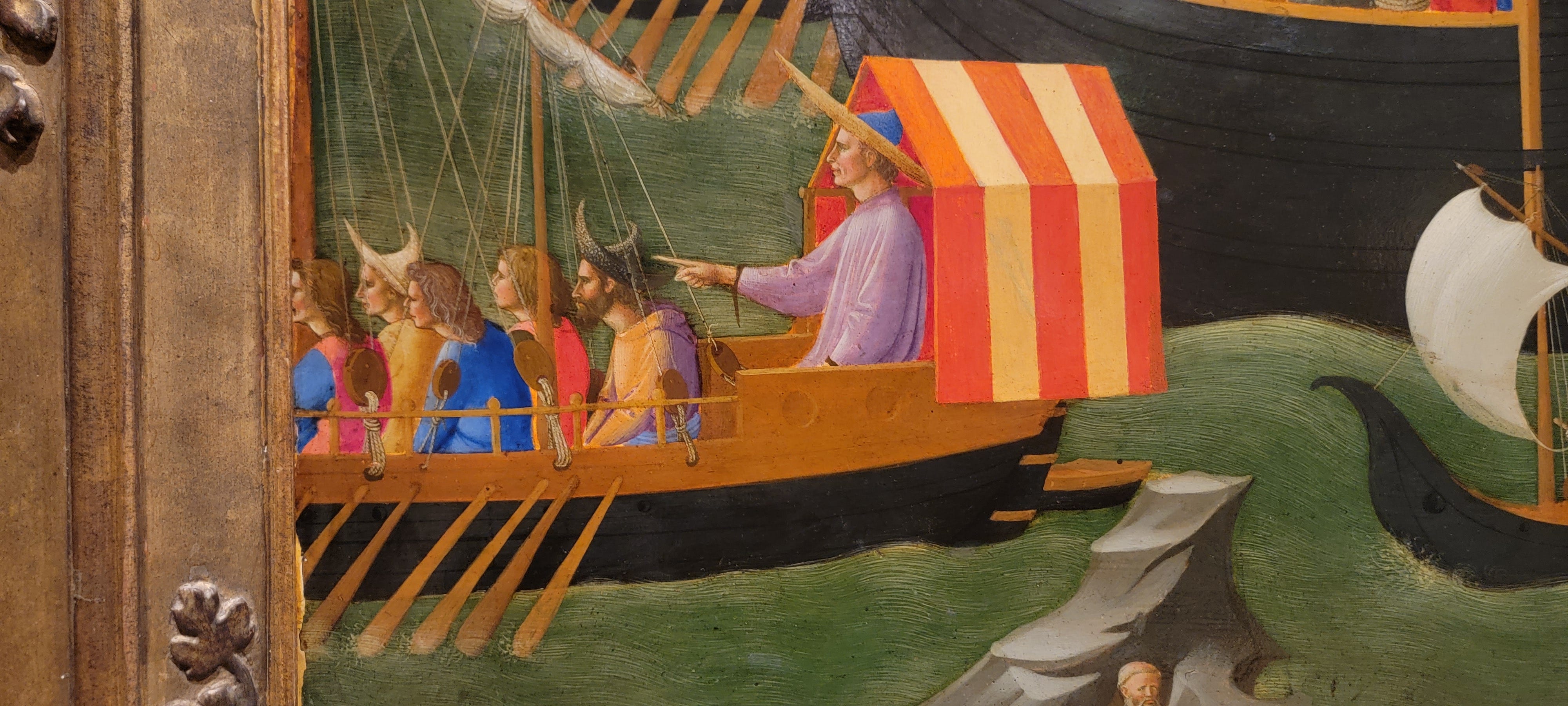
From Gestures (2014) by Vilém Flusser, translated by Nancy Ann Roth.
“It is apparent that the disruptive gesture resembles work. Work is a gesture whose motive lies in the decision to make something different from what it is, because it is not as it should be. Both destruction and work decide that something is not as it should be. Unlike work, destruction decides not to make it differently but to get rid of it altogether. It negates not just the way the object is but the object itself. One could then suppose that destruction is more radical than work. That would be an error. It is less radical, for its decision does not get at the roots of the not-supposed-to-be. It has no model of obligation. Work is revolutionary. It replaces that which should not be with something that should be. Destruction is not revolutionary: it says no, but not dialectically. The being expressed in the destructive gesture is less radical in the world than one articulated in gestures of work.”
“The gesture not only reaches from the present into the future but also brings an anticipated future back into the present and returns it to the future: the gesture is constantly monitoring and reformulating its own meaning.”
“The gesture of painting is a form of freedom. The painter does not have freedom, he is in it, for he is in the gesture of painting. Being free is synonymous with actually being there. The observation of painting allows us to see the concrete phenomenon of freedom. Only through subsequent efforts to explain it can its ontological, aesthetic, and political dimensions be distinguished. Freedom is actually indivisible: it is the way we recognize that others are in the world with us.”
“The meaning of the gesture of painting is the painting to be painted. This was not discussed very much in this essay because the intention was to pursue the gesture itself. Of course, the painting to be painted is assumed in the gesture, the painted painting is the stiffened, frozen gesture. If there were a general theory of gestures, a semiological discipline responsible for deciphering gestures, art criticism would not be empirical or ‘intuitive’ and would not try to explain aesthetic phenomena away by assigning causes as it does today. Rather, it would be an exact analysis of gestures that have solidified into paintings. In the absence of any such ‘choreographology,’ the better strategy may be to observe the gesture as it occurs before us and in us: as an instance of freedom. It means to try to look at the world with fresh eyes, without the prejudicial spectacles of objectification and abstraction that come with our tradition. Then the world would ‘appear’ again, illuminated with the splendor of concrete phenomena.”
“The subject is the cause of the photograph and the meaning of painting.”
“This view of ourselves in a situation (this ‘reflexive’ or ‘critical’ vision) is characteristic of our being-in-the-world: we are in the world, and we see it, we ‘know’ about it. But to say it once more: there is nothing ‘objective’ about this. The gesture with which we release ourselves from a particular role and which is just as available to the man with the apparatus [that is, a camera—F.] remains bound to a ‘place’ from which we can assert that we are experiencing the same situation twice. This ‘place’ is the basis for a consensus, for intersubjective recognition. If we encounter the man with the apparatus on this basis, we don’t see the situation ‘better’; rather, we see it intersubjectively, and we see ourselves intersubjectively.”
“[T]o observe a situation is to manipulate it, or to put it another way, observation changes the observed phenomenon. To observe a situation is, to the same extent, to be changed by it. Observation changes the observer. … The objectivity of an image (an idea) can only ever be the result of manipulation (observation) of one situation or another. Each idea is false to the extent that it manipulates what it takes into consideration, and in this sense, it is ‘art,’ which is to say fiction. Nevertheless, there are ideas that are true in another sense, namely, in really grasping what is under consideration. That may be what Nietzsche meant when he said that art is better than truth.”
“It is banal to regard the cinema as the archetypal womb, that windowless cave that means both birth and death, even though the similarities between cinema and Plato’s cave, with the moving shadows on the wall, are so striking that it’s impossible to read Plato’s myth without thinking of films. Banal as the archetypal connection may be, then, the thought that Plato was the first film critic is a provocative one.”
Dissident Muse Journal is the blog of Dissident Muse, a publishing and exhibition project by Franklin Einspruch. Content at DMJ is free, but paid subscribers keep it coming. Please consider becoming one yourself, and thank you for reading.
The current exhibition in the Dissident Museum is Suddenly, A Tree Appeared: Marek Bennett, Greg Cook, Ansis Puriņš.
Dissident Muse Journal is publishing a serial comic, The Socialist Book of the Dead: A Graphic History of Collective Failure.
🌟 Can you put this entire post on a T-shirt?
Some truly amazing text in this glorious essay.