
Thunderclap (1)
An Asynchronous Studio Book Club reading of Thunderclap: A Memoir of Art and Life and Sudden Death by Laura Cumming.

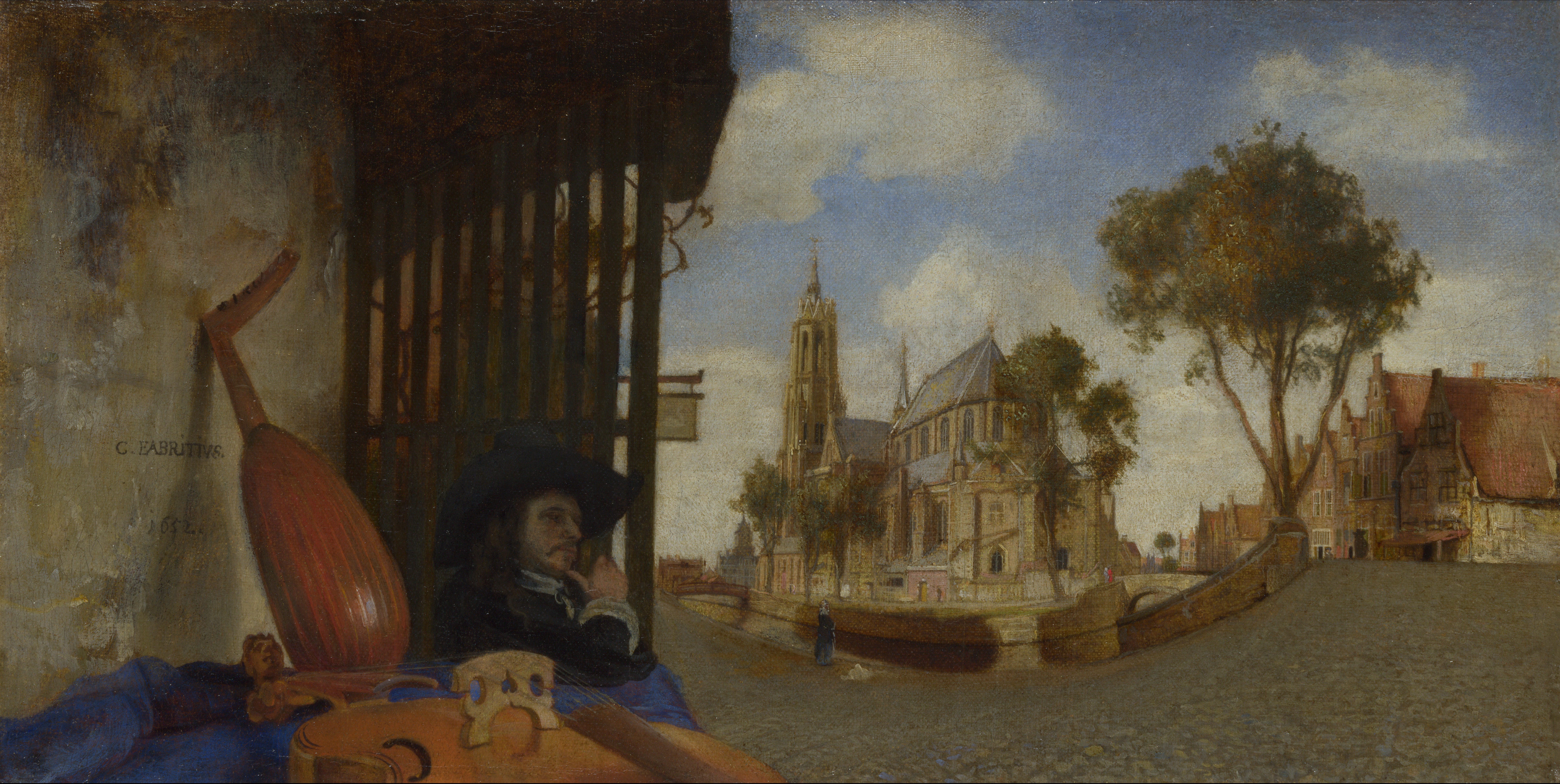

Thunderclap is a prolonged meditation on Carel Fabritius, a pupil of Rembrandt known mainly for The Goldfinch from 1654. Laura Cumming instead focuses on the slightly earlier View of Delft in the National Gallery, which she got into the habit of visiting as a young writer in London, battered by youthful passions.
This painting became a kind of staging post for me on a specific journey across London. I used to walk down Charing Cross Road from the publishing house where I worked, slip through the side entrance of the National Gallery to see the art, and then catch the Tube to meet someone with whom I was having an almost comically doomed affair. The Dutchman gave me luck, or perhaps it was courage. For pictures can shore you up, remind you who you are and what you stand for. The relationship we have with them is so singular and unique that nobody can gainsay our experience. What you see is what you see, yours alone and always true to you, no matter what anyone else contends. Once, I remember repeating the route on my return and glimpsing the picture twice in one day, just to cancel out the in-between time of misunderstanding and impasse. Later on, in a new job in Soho, I would zigzag through Chinatown and into the back door of the museum to look at the art at lunchtime. I even saw A View of Delft late on a winter’s night, slipping in with a painter who had visiting rights after hours. How can it be that I did not know how he got them, did I never ask? Such mysteries we leave undisturbed like a perfect meniscus when young.
I admire Cumming’s literary style. She lets details build up into an emotional effect. When something stands out in her copy, like that meniscus analogy, it usually feels a bit disruptive. (Though it’s not wrong that one may live long enough to reminisce about one’s younger body.) The narrative is associative…
The polder spreads out in snowbound winter like a great sheet in the bleaching fields of so many Dutch paintings, all those rectangles of white linen laid out to brighten in the sun’s purifying rays. Leeuwenhoek sold bales of it in his shop and I suppose that Fabritius’s shirt in the self-portrait must have been cut from exactly such cloth, bleached in the Middenbeemster meadows. Church vestments still survive from those times, their fabric pale from the brilliance of a seventeenth-century sun.
And sometimes associates all the way to her father, the Scottish painter James Cumming. This is delightful:
At school we were later taught, to my father’s disgust, that white was not a colour. We were also instructed never to mix white or black with our paints to make things lighter or darker. Our teacher insisted we use more water or choose a ‘proper’ colour in the first place. When I came home after a scolding, my father took white and painted a fine scattering of snow against a night sky of black gouache. Always go your own way.
The book maintains an affirming tone despite being drenched in death. Fifty pages in, and Fabritius has, at the age of 21, survived his wife and their three children. The combination is immensely melancholy. Fabritius, we know up front, perished in the Delft Thunderclap, which also destroyed most of his work and the contributions they could have made to art history. They might have been considerable, as the handful of surviving works indicate extraordinary sensitivity and compositional inventiveness.
Dissident Muse Journal is the blog of Dissident Muse, a publishing and exhibition project by Franklin Einspruch. Content at DMJ is free, but paid subscribers keep it coming. Please consider becoming one yourself, and thank you for reading.
Our current title in the Asynchronous Studio Book Club is Thunderclap: A Memoir of Art and Life and Sudden Death by Laura Cumming. For more information, see the ASBC homepage.
The next exhibition in the Dissident Museum is Suddenly, A Tree Appeared: Three Comics Artists Look at the Landscape.
A lot to appreciate here, thank! Unfortunately, after looking up the details of the Delft Thunderclap I was lead me down an ADD-fueled rabbit hole of large scale accidental explosions throughout history!
"What you see is what you see, yours alone and always true to you, no matter what anyone else contends." Yes, absolutely. It is a personal matter, simply between you and the work, and it must be if there is real interaction and connection. All else is extraneous or applied, should you allow it. People who cannot or will not connect that way really shouldn't bother with art but go elsewhere.