
Phenomenological Phunnies
Part Zero of Infinity.

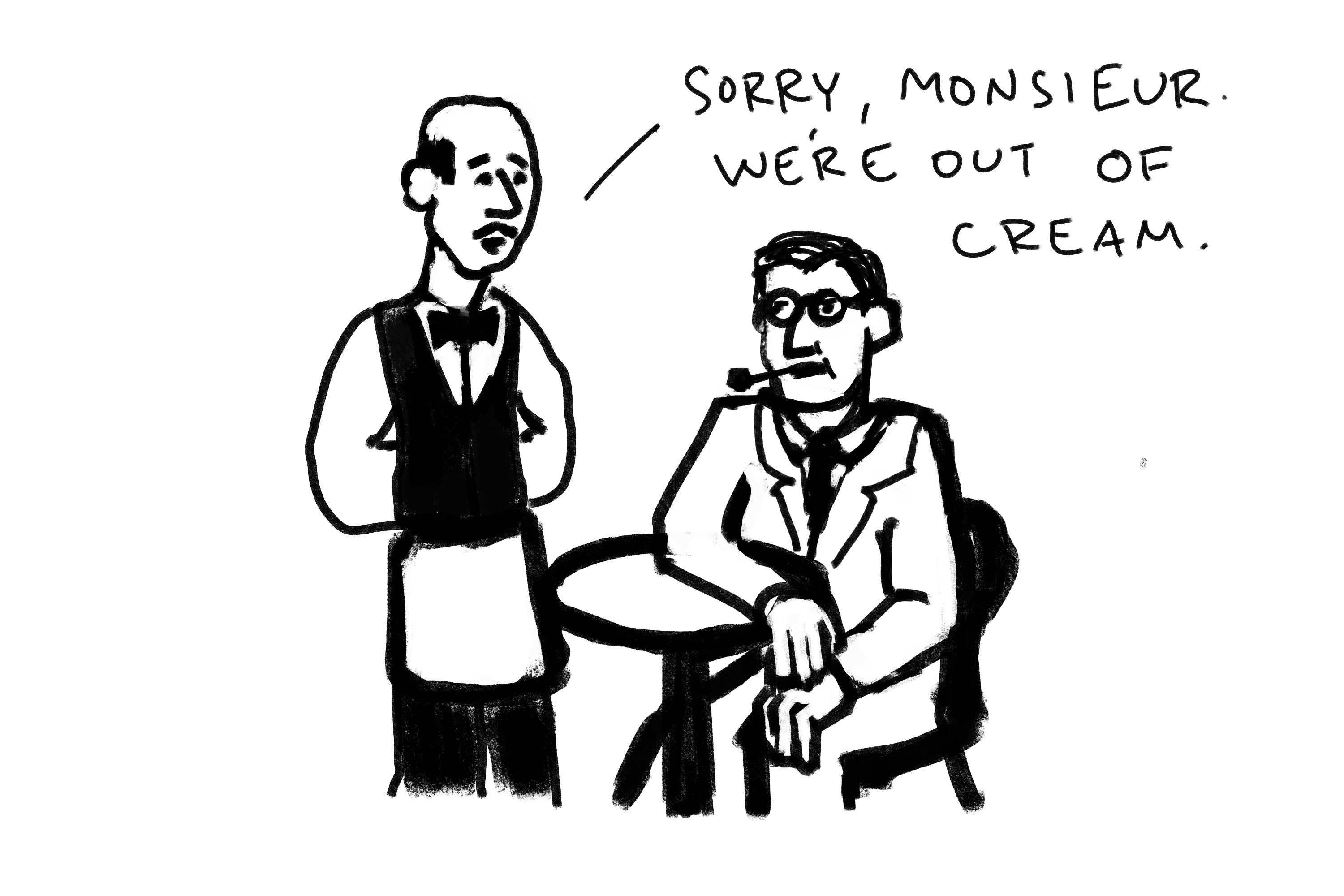
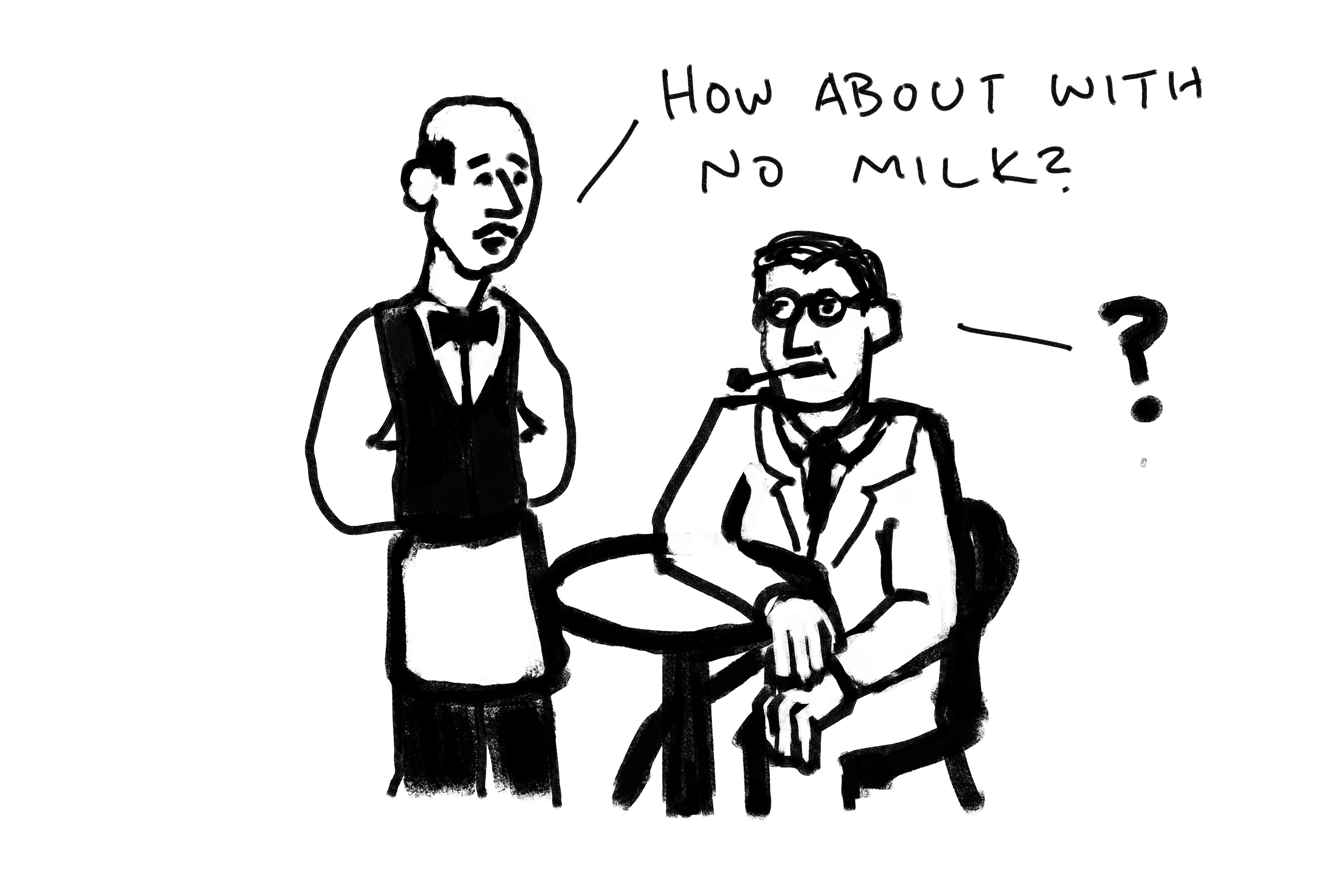
A comic of a joke retold by Sarah Bakewell in At the Existentialist Café.
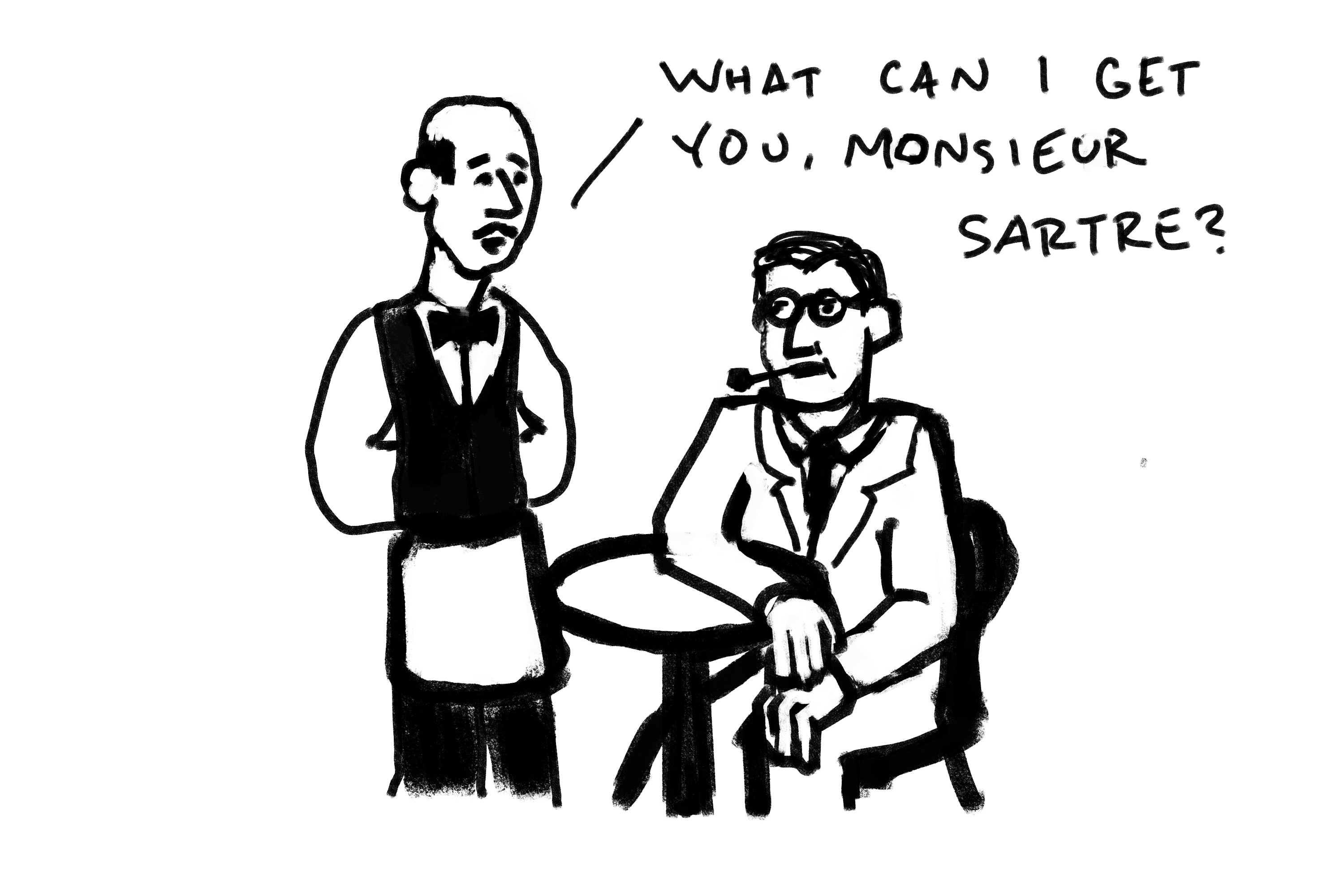
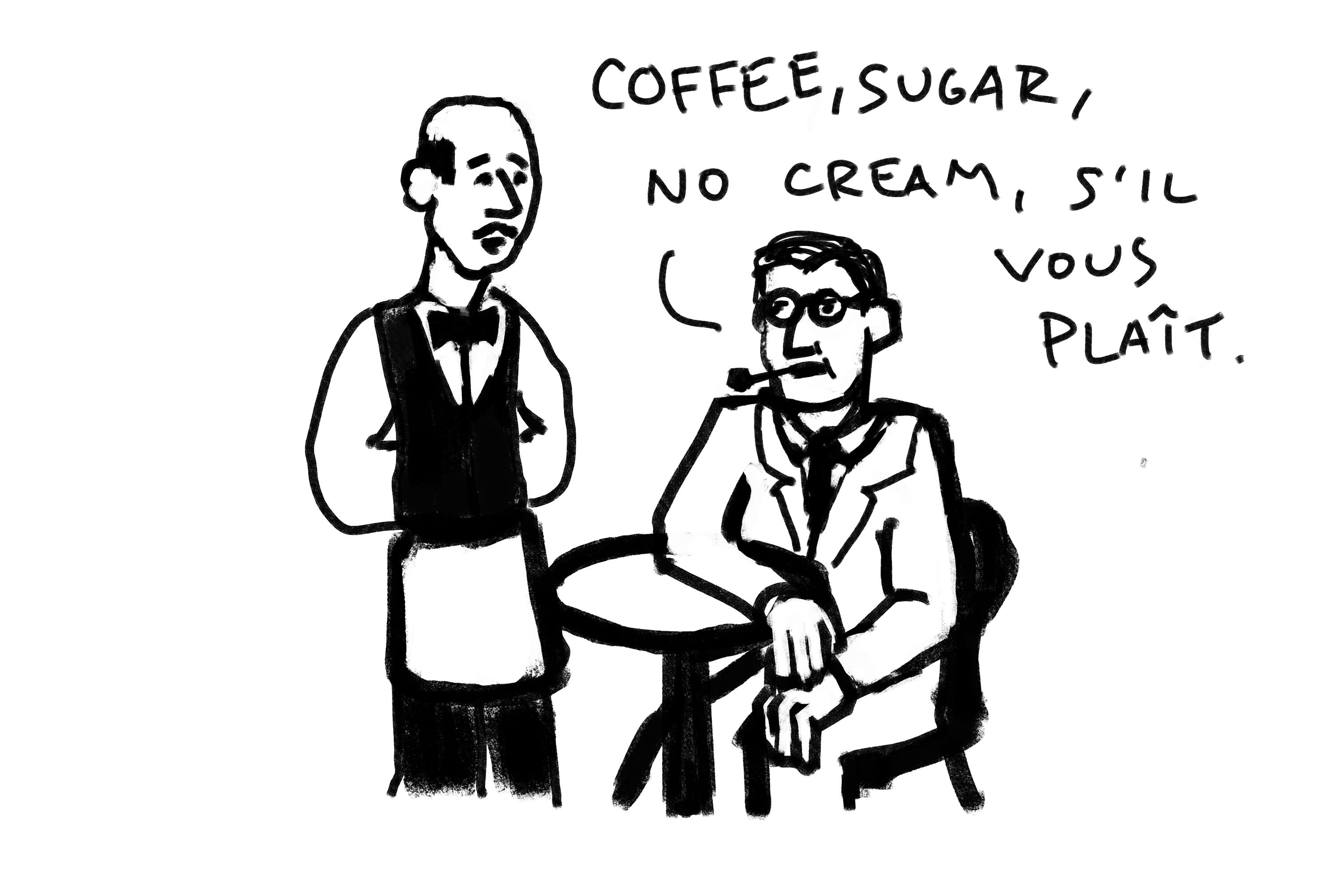
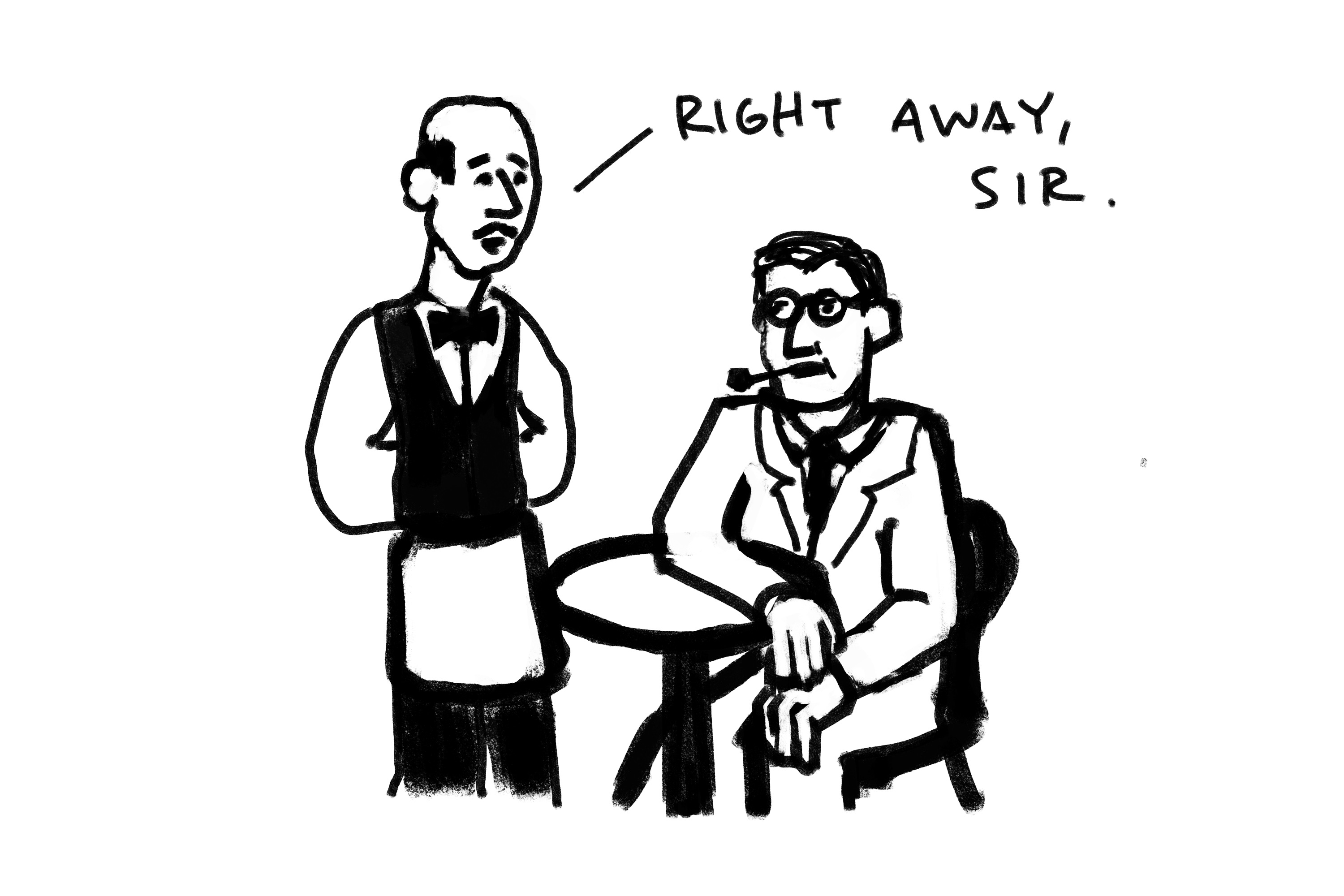
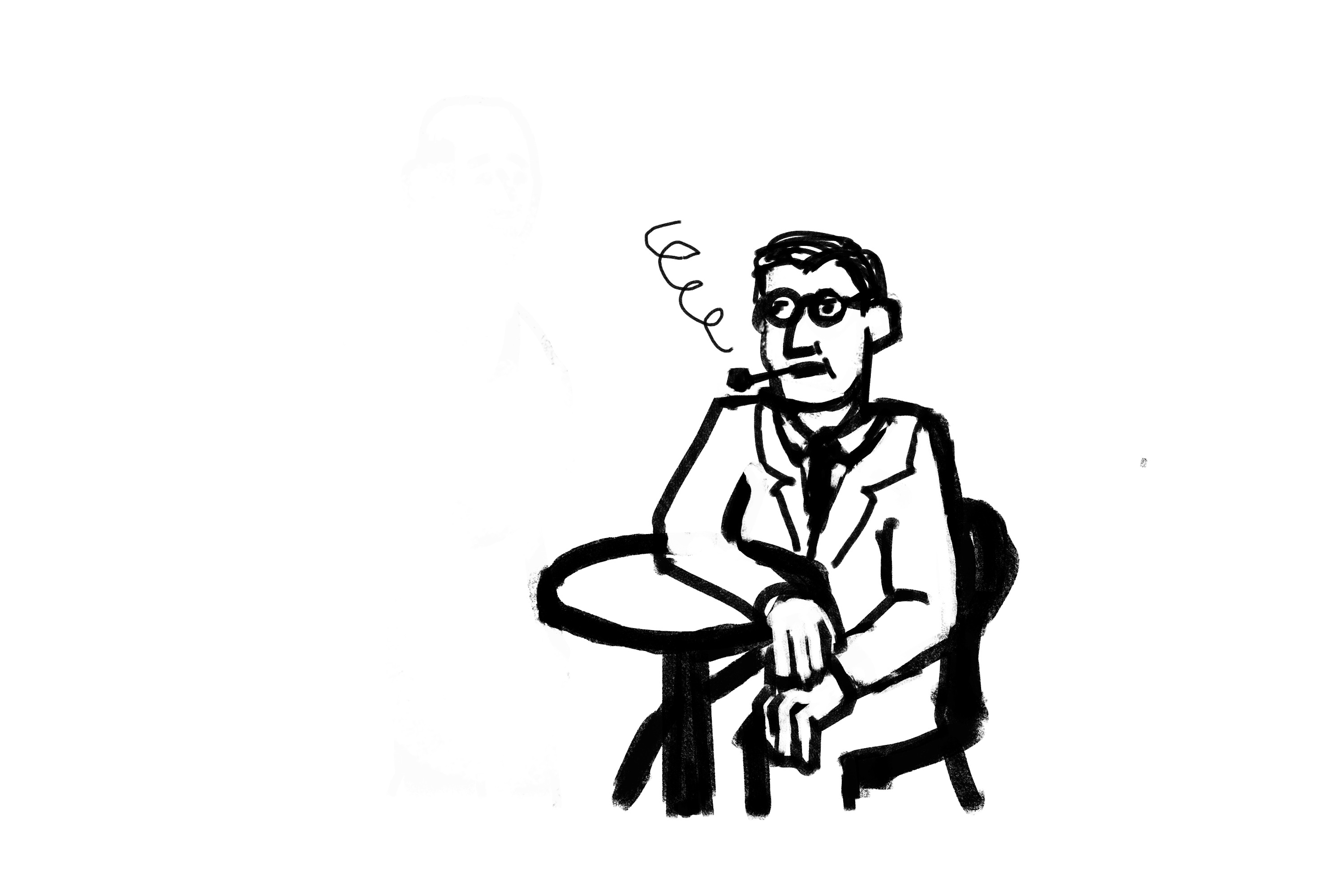
Bakewell explains:
To make this point, [Sartre] begins by dividing all of being into two realms. One is that of the pour-soi (“for-itself”), defined only by the fact that it is free. This is us: it is where we find human consciousness. The other realm, that of the en-soi (“in-itself”), is where we find everything else: rocks, penknives, bullets, cars, tree roots. …These entities have no decisions to make: all they have to do is to be themselves.
For Sartre, the in-itself and the for-itself are as opposed as matter and antimatter. Heidegger at least wrote about Dasein as a kind of being, but for Sartre the for-itself is not a being at all. It is a “nothingness,” a vacuum-like hole in the world. Gabriel Marcel memorably described Sartre’s nothingness as an “air-pocket” in the midst of being. It is, however, an active and specific nothingness — the sort of nothingness that goes out and plays soccer.
…The joke hinges on the notion that the Absence of Cream and the Absence of Milk are two definite negativities, just as Cream and Milk are two definite positivities.
It is a peculiar idea — but what Sartre is trying to get at is the structure of Husserlian intentionality, which defines consciousness as only an insubstantial “aboutness.” My consciousness is specifically mine, yet it has no real being: it is nothing but its tendency to reach out or point to things. If I look into myself and seem to see a mass of solidified qualities, of personality traits, tendencies, limitations, relics of past hurts and so on, all pinning me down to an identity, I am forgetting that none of these things can define me at all. In a reversal of Descartes’ “I think, therefore I am,” Sartre argues, in effect, “I am nothing, therefore I am free.”
I guess you had to be there. Or not be there.
This is a cheap-as-dog-kibble study meant to flex some long-unused muscles in preparation for further work on The Socialist Book of the Dead. I haven’t made narrative comics in years. Sure, plenty of weird abstract stuff, but not straight-ahead storytelling. And it was long before the digital tools, which I’m okay at, but no master. The only thing I’m completely happy with in the above is the ratio of the panels.
But as Sartre said, “The artist invites the spectator to undertake a journey together with him, and it is in this journey that the work of art is created.” Welcome to the beginning of the journey.
Dissident Muse Journal is the blog of Dissident Muse, a publishing and exhibition project by Franklin Einspruch. Content at DMJ is free, but paid subscribers keep it coming. Please consider becoming one yourself, and thank you for reading.
Our next title in the Asynchronous Studio Book Club is Confessions of an Old Jewish Painter by R.B. Kitaj. For more information, see the ASBC homepage.
The next exhibition in the Dissident Museum is Suddenly, A Tree Appeared: Three Comics Artists Look at the Landscape.
They say if you have to explain a joke it kills the humor, but when the explanation involves the phrase "the structure of Husserlian intentionality, which defines consciousness as only an insubstantial 'aboutness.'" then it's FUNNY all over again.🛠️
Hooray for flexing those funny-muscles.
Thanks Franklin, you definitely seem to have found a wonderful way of discussing your points which are deep and layered. Much respect!