
Cutting Through Aesthetic Materialism
Contra Scott Alexander contra everyone on taste.

Scott Alexander continues to grapple with the problem of taste in art. I applaud his doing so. But he is as qualified for the task as I am to critique statements about psychiatric pharmacology, which is his metier. This is no fault of his except in the neglect of reading some extremely specialized and abstruse literature, for which I begrudge no one.
The title of this essay is taken from Cutting Through Spiritual Materialism, in which Chögyam Trungpa describes how the ego uses the mechanisms of enlightenment to reinforce itself.
Ego is able to convert everything to its own use, even spirituality. For example, if you have learned of a particularly beneficial meditation technique of spiritual practice, then ego’s attitude is, first to regard it as an object of fascination and, second to examine it. Finally, since ego is seeming solid and cannot really absorb anything, it can only mimic. Thus ego tries to examine and imitate the practice of meditation and the meditative way of life. When we have learned all the tricks and answers of the spiritual game, we automatically try to imitate spirituality, since real involvement would require the complete elimination of ego, and actually the last thing we want to do is to give up the ego completely. However, we cannot experience that which we are trying to imitate; we can only find some area within the bounds of ego that seems to be the same thing. Ego translates everything in terms of its own state of health, its own inherent qualities.
So it is with artistic reality and thinking. Thinking is capable of mighty feats of categorization and analysis. But artistic reality is a larger domain. To access it, thinking is necessary but not sufficient. As I’ve noted in the past, a decades-long effort has gone into expanding access to art from the relatively few people who can see (in the sense of taste) to the relatively many people who can read. Thinking has played a crucial role in that effort, and it can claim successes. I am not an anti-conceptualist. I doubt, along with Clement Greenberg, that form and content can be distinguished for the purpose of analyzing them in isolation, or either of them from the social aspect of taste formation. But also along with Greenberg, I am primarily interested in effect, which is the emanative aspect of artistic reality. Effect cannot be apprehended by thinking. It can only be intuited and felt.
The case of materialism I’m objecting to here is the demand that art effect reveal itself upon the performance of certain procedures. Scott is making this mistake, and so is some of the art he’s critiquing, though in a different way. Art effect requires sensitized objects to come into the presence of sensitized attention.
Trungpa’s authorities for his statements are the masters of the Kagyu lineage. Mine are Wilhelm Worringer and Mikel Dufrenne. Each of them was a mighty intellect known primarily for a single work: Abstraction and Empathy (which we read in two parts in the Asynchronous Studio Book Club) and The Phenomenology of Aesthetic Experience, respectively. Worringer is especially relevant to Scott’s essay because he singles out Klee’s Angelus Novus for a critique that Klee and his circle refuted with claims derived from Abstraction and Empathy, and it’s interesting to see the argument rehashed a century later.
Burning Steak
Scott posits a scenario in which a truly discerning restaurant critic has meals delivered to him blindly so he’s not influenced by ambience, the chef’s backstory, and whatnot, so as to judge solely how the food tastes. This he likens to a randomized control trial’s ability to filter out confounders.
The analogy raises a substantive question about how closely gustatory delectation maps to visual delectation. At a basic level it may. But challenges to the premises of visual art can be attempted that would be unendurable if made to the premises of cuisine. I’ll return to this.
Also, it neglects the full scope of restaurant criticism as a literary genre. As readers, we don’t only want to know how the food tastes, although that’s crucial. We would also like to know how pleasant it was to dine there, what the atmosphere was like, how the service treated us, and whether the chef has an interesting angle on cooking.
The hypothetical blind restaurant reviewer for whom Scott thinks we should make room would be performing the kind of criticism for which art’s formalist critics were rightly condemned, including by no less than the supposed formalist critic Clement Greenberg. Someone once made a crack about a formalist critic getting an audience in front of a Last Judgment, and talking about the abstract composition without ever referencing the contents of the Book of Revelation. Of course, yammering about Christian eschatology without ever getting around to how the artist handled the picture would also be a miss. The point is that quality is situated, and you can’t fully address the quality without also addressing the situation.
“I suppose it’s true that making a visually appealing dish succeeds at delighting the senses no less than making something delicious,” concedes Scott, sort of. “Even getting to hear about the chef’s dumb childhood in Sardinia is potentially part of the ‘experience,’ if you like this sort of thing.” He says so with the point that some critics should be allowed to disregard everything extrinsic to how the food tastes. But Sardinia has a distinct cuisine, and knowing that the chef is Sardinian gives us indicators about what qualities we should be looking for in the food in his restaurant. Thoreau: “Many an object is not seen, though it falls within the range of our visual ray, because it does not come within the range of our intellectual ray, i.e., we are not looking for it. So, in the largest sense, we find only the world we look for.” Taste, even in food, is not merely sensory. Isolating sensory data does not give us a full reading of taste, and knowledge mediates what sensory data appear to us in the first place.
Scott once posted a quiz that mixed AI-generated images and human-made images, and challenged readers to distinguish them. Referencing this, he asked, “If you randomized-controlled-trialled art so mercilessly that all the novelty effects and context effects and pattern language effects got eliminated, would Beauty be what was left?” The answer is No. What’s left would be decontextualized sensory impressions that may or may not be pleasurable, but would be missing the holism implied by “Beauty.”
Crushed by Statuary
In Scott’s next scenario, you go to a museum and see a Renaissance sculpture. It is magnificent—you experience awe and are henceforth transformed. Later you find out that it was in fact “made c. 1995 by a Boomer from Ohio, who mass-manufactured it and sold copies to rich dentists to put in their McMansions.” Was your experience wrong or faulty? He then flips it again: “Suppose that a sense of artistic responsibility (or a sense of cringe) causes you to root these feelings out of yourself, until you can only regard the sculpture with snide contempt—and then the curator tells you that the placard was a prank, and the sculpture was by Michelangelo after all? Scott’s point is that if you “genuinely believe in the power of art to awe and transform, it’s strange to also care about its novelty and provenance.”
What would be strange is that connoisseurship was so arbitrary. Being told that a given sculpture was made by Michelangelo is akin to knowing that our chef is Sardinian. It indicates that we should be looking for Michelangesque qualities in the work, not in a general “great Renaissance sculpture” sense, but in the handwriting of a specific man’s wielding of the chisel. Present here is a qualitative specificity that does not reduce to a checklist that you can put into words. Effect is in that qualitative specificity.
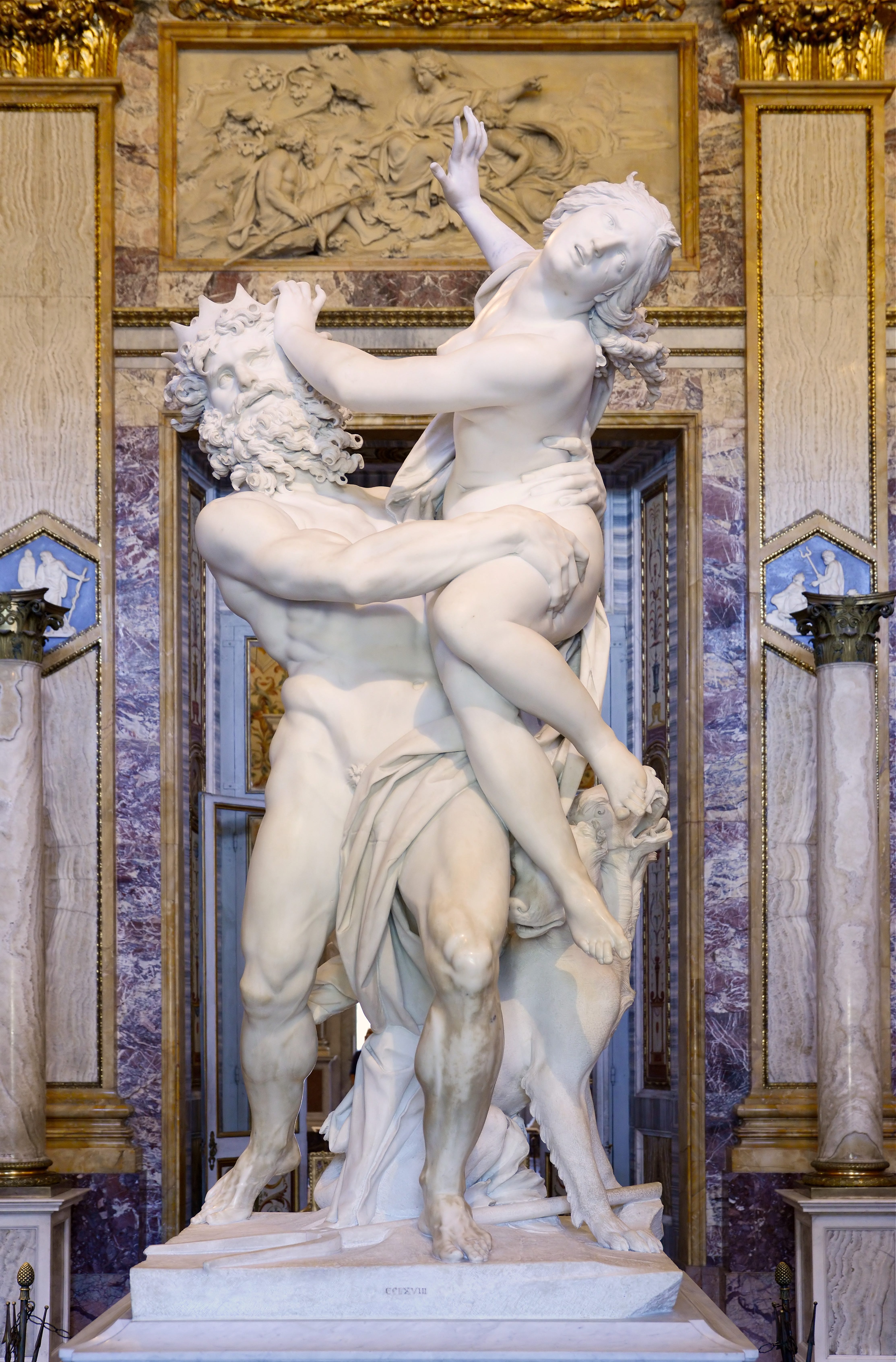
To answer the question, if you were in awe and were henceforth transformed because you got the Renaissance Experience™ in the way that you thought you were supposed to, according to what you gathered from the experts, then your awe and transformation were ersatz and you deserve your subsequent disappointment. If instead it hit you like a blow to the chest and you couldn’t stop thinking about it, your experience was substantive. All that’s missing is some refinement of taste that will remedy itself as you investigate the sculpture tradition, which is vast. Let me tell you, if you thought Boomerangelo was great, the Bernini Proserpina in the Borghese Gallery will knock you into the wall. I’ve been there. I have attempted to sculpt marble. There is no way that a sculptor working in the mid-Nineties for mass production could have reached that level of quality. I can accept Scott’s hypothetical as such, but not as a real-world illustration.
Lurking behind Scott’s remarks on this topic is disdain for the possibility that some people really do have good eyes.
Most Critics Are Bad and Should Feel Bad
…there is a million-item checklist every modern book must follow not to get panned as “gauche” or “unsophisticated”, and almost no great book of the past followed any of these rules. The Iliad certainly didn’t. … When I ask art critics about this, they say that it would sound ridiculous to write a Homeric-style epic poem today. … [But] if critics make a pact to excoriate any book more than 5% different from the median Jonathan Franzen novel, then every book outside that 5% margin of error will sound weird and jarring and involve a conscious decision to ruin one’s own career. … We’ve just gotten stuck in a bad equilibrium. Insofar as there’s such a thing as Art—as opposed to mere sophistication—shouldn’t its chief job should be to escape?
Yes. Most critics are not worth a bag of wet saltines. You should not make art for them.
But the critics questioned above are correct that to write an un-self-conscious Homeric epic in our year would be a silly exercise. A self-conscious one might work. Much of the problem of making art in the 21st century is to avoid repeating the past while not chasing after the latest thing, which is almost certainly an evolutionary local minimum.
Critics, as a rule, couldn’t organize a pact to continue breathing. But with few exceptions, they are sled dogs for consensus institutional taste. This year’s Venice Biennale, with the theme “We Will Not Suffer a Jew to Live” “In Minor Keys,” is basically an exercise in how far extremist progressives can drag moderate progressives into extremism. The United States representative is Alma Allen. The selection of Allen is thought to be the product of unspecified pressure from the Trump administration. Sure enough, here’s ArtNews:
The United States is in a sad state of affairs. That wouldn’t come as a surprise to anyone who reads or watches the news, or even just scrolls social media and skims the headlines. But you would also know it if you happened to walk by the US Pavilion at the 2026 Venice Biennale, where the American representative this year, Alma Allen, has installed five extremely unremarkable sculptures in front of the building, along with some 20 works inside.
It’s a sharp turn from how the US Pavilion has looked the last couple of times around. The previous two artists to take over the pavilion, Simone Leigh (2022) and Jeffrey Gibson (2024), sought to radically transform the Palladian structure in the center of the Giardini, built in 1930. Despite their drastically different approaches, both artists sought to surface the history of colonialism and empire at the core of the United States’ founding and present.
This is as awful as it looks, with the critic punishing this year’s artist for being white and not rehashing the progressive bromides that have been on display at the American pavilion for the last two Biennali. What may look like a cabal is just banality, cowardice, and a herd mentality so acute that an actual sheep would find it embarrassing.
The History of the Angel of History
After praising an especially fine passage of Walter Benjamin admiring the Klee Angelus Novus, Scott sought out the painting. “I guarantee you that you will not be prepared for the actual Angelus Novus painting. Whatever you imagine it to be, it’s not that. I read Benjamin’s commentary first and I Googled Angelus Novus second, and I thought somebody was playing some kind of prank. Better if I had never seen it, and had kept the beauty of Benjamin’s prose unsullied in my mind. Still, if you insist on looking, you can see it here.”

I wish Scott had articulated why he was so disappointed. I’ve looked at a lot of Klee, so I knew not to expect an image like would have been made by William Blake or Gustave Doré or another angel-depictor. But that Scott’s objections ought to be self-evident is the sort of assumption that Worringer sought to abolish in 1906. Worringer contended that whether a culture produced mimetic art or abstracted art lay downstream of the quality of its volition. Optimistic peoples with relatable gods, like the Hellenistic Greeks, produced mimetic art. Anxious peoples with indifferent, inscrutable gods, such as the Egyptians, produced abstract art. The shape of a given art was decided by a “psychic attitude toward the cosmos.” Klee was paraphrasing Worringer when he said that “The more horrifying the world becomes, the more art becomes abstract.”
The art historical canard in Worringer’s younger years was that Gothic art develops into Renaissance art, and the former should be viewed as an inferior stage. But Gothic art has much to recommend that was lost when European sculptors became more mimetic. Worringer was among the first to say that the art of the High Renaissance was not a measuring stick for all other art ever made, though Zola said as much when writing about Manet a couple of decades earlier. Worringer warned that we should evaluate the art of a culture “not from our, but their own suppositions.” Scott returns to a food analogy:
Even if you think that dialectic and “being part of the conversation” is important, it’s obnoxious and in some sense parasitic to demand that it occupy the same part of semantic space as sensory delight. Imagine that you go to a restaurant and the food tastes terrible. When you complain to the chef, he objects “Ah, but this is a response to Mario Alberti’s famous meal of 1974, trying to demonstrate that the difference between lasagna and tortellini is only in your mind. Didn’t you catch that the juxtaposition between cloves and truffle salt represents the juxtaposition between fascism and the superego?”
I’ve made analogies like this too. It’s fine, to illustrate that we ought not put up with art humbug in the way that we’re sometimes asked. But it also illustrates that the expressive range of visual art is greater than that of cooking. It’s not the zinger that Scott thinks it is.
The related point, “If the whimsical adversarial philosophical point-scoring game has the same name as the creating-beautiful-things game, everyone will get confused, and only one of them can survive,” is more trenchant. Directionally, I agree with it. But it’s not necessarily going to be practicable to disentangle them. What might have been called pure conceptualism was only made for two or three decades, starting in the 1950s. (The original Duchamp Fountain from 1917 was only considered significant once Sidney Janis commissioned new versions of it in the 1950s.) While I work in something close to an art-for-art’s-sake mode, more than a few readers of this blog are engaged simultaneously in conceptual and aesthetic efforts, responding to current events obliquely. Those projects have as much chance of succeeding artistically as mine, all things being equal.
Dolphin What?
In 1920, declaring a urinal to be art had never been done before, but Duchamp ruined that one, guess the next step is sharks in formaldehyde. Next year it’ll be, I don’t know, a baby with a dolphin pancreas on its head. People will say the same boring things - “This challenges us to ask whether a baby with a dolphin pancreas on its head can truly be art - the answer may surprise you!” Some rich person will buy it for $200 million as part of a tax evasion scheme. The people who scoffed at Dolphin Pancreas Baby will get told that by expressing an opinion at all, they are participating in exactly the kind of conversation that Dolphin Pancreas Baby was meant to evoke, and therefore retroactively vindicating its existence.
I agree, this kind of thing is boring. Here’s where I jump screaming off the train of conceptualism. Art about the nature of art is for rich losers.
If anything it understates the scope of the problem. Dufrenne:
The opposite of the beautiful is not the ugly, as we have known since Romanticism. The opposite of the beautiful is the abortive, in the case of the work which claims to be an aesthetic object, and the indifferent, in the case of the object which makes no such claim. This implies that the aesthetic object can be imperfect: who will dispute it? But we cannot measure the aesthetic object’s imperfection by some external standard. It is imperfect because it does not succeed in being what it claims to be, because it does not realize its essence; and it is in terms of what it aspires to be that it must be judged and that it judges itself. If Picasso’s harlequins sought to be Watteau’s figures, they would be failures—as would Byzantine frescoes if they aimed at being Greek paintings, and modal music if it aspired to be tonal. But if an object makes no claim to being aesthetic, it has not failed. It can even be beautiful in its own sphere, as a tool or a tree is beautiful. But it is essential to the aesthetic object that it be aesthetic: it makes promises that it must keep. In other words, it is essential to an aesthetic object that it embody its own norm—not a norm which our thinking or taste imposes on it, but one which it imposes on itself or which its creator has imposed on it. …whatever the means of a work may be, the aim it sets itself in order to be a masterpiece is fullness of sensuous being and of the meaning immanent in the sensuous. Now, the work is truly meaningful in its unique way only if the artist is authentic: it says something only if he has something to say, if he truly wants to say something. … The norm of the aesthetic object is its will to the absolute. And to the extent that the aesthetic object proclaims and attains this norm, the object itself becomes in turn a norm for aesthetic perception. Thus the aesthetic object assigns to aesthetic perception the task of approaching the work of art without any prejudice, of giving it as much credit as possible, of placing it in a position to furnish the proof of its being.
Basically, it is not we who decide what is beautiful. The object itself decides, and it does so by manifesting itself. The aesthetic judgment is passed from within the object rather than within us. We do not define the beautiful, we ascertain what the object is. And, in probing the aesthetic object in general, we must no longer look for its specific difference in a definition of the beautiful. Not that we refuse all use of the idea of beauty or challenge the judgment of taste; in deciding to refer to universally admired works, we are tacitly subscribing to this judgment. But what we ask of it is not to supply the criterion of the aesthetic object but to recommend the works which will most reliably manifest this criterion—i.e., works which are aesthetic objects to the fullest extent. Thus an aesthetics is possible which does not reject aesthetic valuation yet is not subservient to it. It is an aesthetics which recognizes beauty without creating a theory of beauty, because basically there is no theory to create: there is the stating of what aesthetic objects are, and to the degree that they truly are they are beautiful.
This is what Dolphin Pancreas Baby and its satirized referents are abandoning when they engage in their social games—beauty, yes, but also “meaning immanent in the sensuous.” Every time someone makes Dolphin Pancreas Baby and a collector buys it for a bajillion dollars, passageways to an important source of belonging in the phenomenological world cave in for people who aren’t sure how to reach it, or even know it’s there.
Here’s Trungpa again:
According to the Buddhist tradition, the spiritual path is the process of cutting through our confusion, of uncovering the awakened state of mind. When the awakened state of mind is crowded in by ego and its attendant paranoia, it takes on the character of an underlying instinct. So it is not a matter of building up the awakened state of mind, but rather of burning out the confusions which obstruct it. In the process of burning out these confusions, we discover enlightenment. If the process were otherwise, the awakened state of mind would be a product, dependent upon cause and effect and therefore liable to dissolution. Anything which is created must, sooner or later, die. If enlightenment were created in such a way, there would always be the possibility of ego reasserting itself, causing a return to the confused state. Enlightenment is permanent because we have not produced it; we have merely discovered it.
Beauty emanates from the art object when we approach it with an attuned consciousness, and enlightenment emanates from reality when we approach it with an attuned consciousness. Dufrenne again: “the work of art as an empirical reality in the cultural world seems to elude us the moment we question ourselves about its being.” Thinking unlocks certain doors. Walking through them is another matter.
Dissident Muse Journal is the blog of Dissident Muse, a publishing and exhibition project by Franklin Einspruch. Content at DMJ is free, but paid subscribers keep it coming. Please consider becoming one yourself, and thank you for reading.
Our current title in the Asynchronous Studio Book Club is Glittering Images: A Journey Through Art from Egypt to Star Wars by Camille Paglia. For more information, see the ASBC homepage.
The current exhibition in the Dissident Museum is Suddenly, A Tree Appeared: Marek Bennett, Greg Cook, Ansis Puriņš.
Dissident Muse Journal is publishing a serial comic, The Socialist Book of the Dead: A Graphic History of Collective Failure.
It may be a small point, but the title of that Bernini is "Il Ratto di Proserpina," which properly translates as "The Abduction (not the rape) of Persephone." The same word occurs in the title of Mozart's opera "Il Ratto dal Serraglio," or "The Abduction from the Seraglio." The coarsening of the usual English rendering is not what Bernini meant nor what his audience heard.
I think the next PROGRESSion in art history has happenned already with the fresh banana masking tape event.
I used to work at the IMJ and could visit the Klee work when it was out. It was very limited in the amount of light it could be exposed to and this was strictly enforced.