
Announcements, All Good Edition
I'm going to be a fellow at AIER. I acquired a Web3 domain. I'll be in a show in Philly. Dissident Muse has a new (old) book coming out.

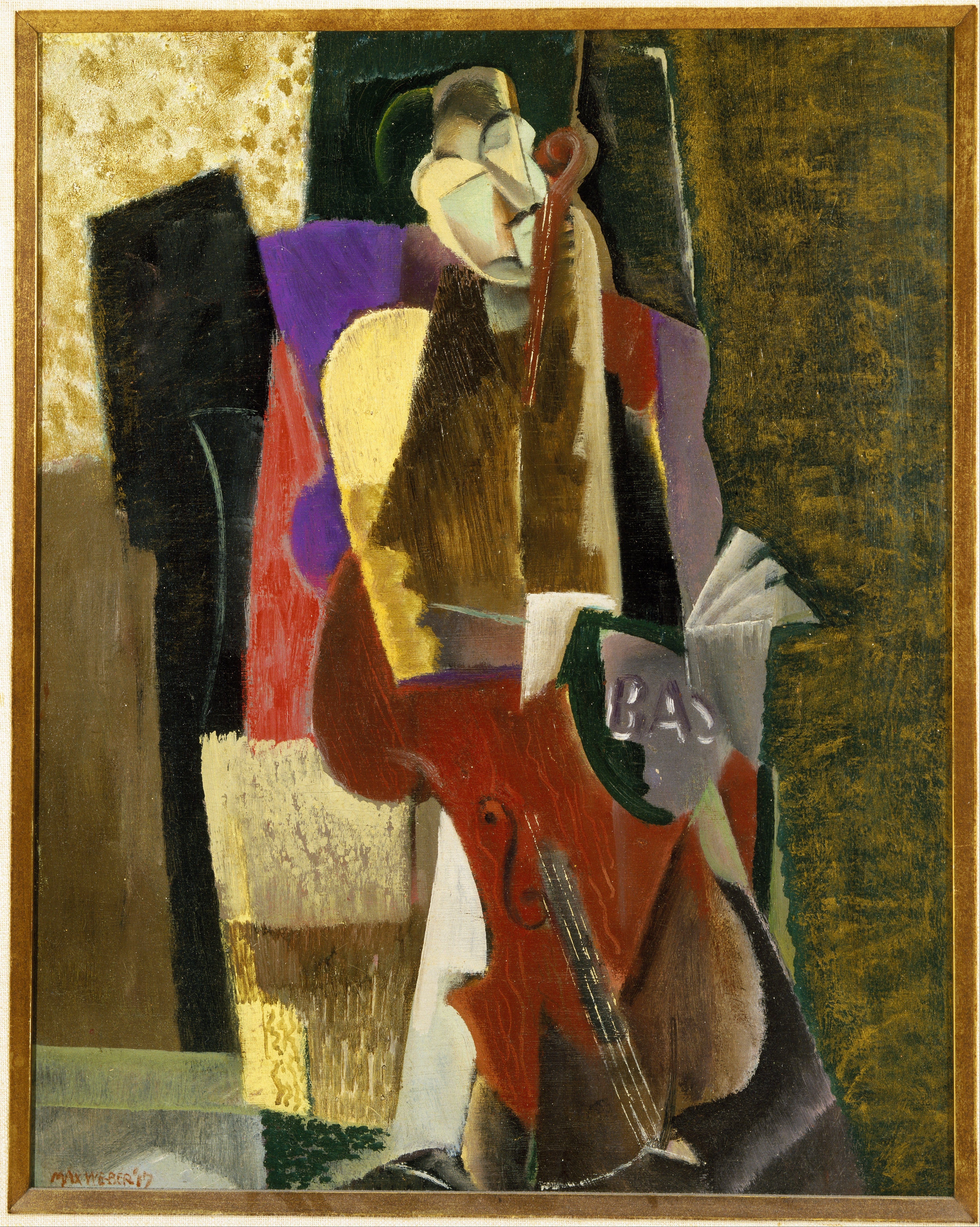
#/media/File:Max_Weber_-_The_Cellist_-_Google_Art_Project.jpg)
The Asynchronous Studio Book Club was derailed again by yet another writing assignment, this one self-imposed. Several weeks ago I discovered that Max Weber—the Jewish painter from Biyalistock, not the sociologist from Erfurt—published a collection of talks given to art students in 1916. Essays on Art, which you can peruse freely in the Internet Archive,1 has some magnificent passages, informed by Weber’s familiarity with Imagist poetry and his keen sense of artistic consciousness.
To see an art work casually is a pleasant experience, but to come in touch with the vision, the spirit of the maker of it, is seeing in participation and it is then not only a gratification but an exaltation. For I feel that through art fresh sight is still in its living process, penetrating the infinite unknown. A superior art work finds a destiny of great distinction; an inferior work unmakes itself through this time-filtering process by not being looked upon again and again. Spirit cements matter forms; without spirit no significant forms can be built. To become intimate with an art work one must unmake and make it again with his eye-hands and mind-eyes. Thus one not only sees the ensemble but the units, and one can more easily enter and feel the intervals of time and of space and the moods composite in the work of art in its plastic formation. To see is to ask, to discover, to discern. To look is to listen to the silent. Through one’s eyes the outer worlds make their impression or imprint upon the inner visual screen, and this the mind sees and gives over to feeling. The result is the proof of the quality of sensitiveness and refinement and of the alertness of the receptive consciousness. Seeing is a gift — a blessing from God.
I fell in love with this book at “Spirit cements matter forms.” The sentence that follows it sounds strangely like Dōgen. I’m republishing it as a Dissident Muse book, bearing the title Eye-Hands & Mind-Eyes: Essays on Art by Max Weber, with the copy and design gracefully updated and a 1,300-word introduction by yours truly, which I spent a week writing. From said introduction:
Weber similarly [to David Sudnow] views art as a bodily activity that entails the mind, rather than a mental activity that entails the body. “Better a brawny sensitive hand, a keen eye, a tender touch, a creative mind and a vivid spirit, than to be a hazy, helpless and useless theorist. Better things of beauty and use from the hands of man, than the wandering theories that weary the flesh and starve the soul.” He says so in protest. Shortly before he declares, “Culture has been too mental and too verbal.” This is in 1914, long before the establishment of what Daphne Patai and Wilfrido Corral called Theory’s Empire in the 2005 book of that name. Some of Weber’s discussion of the spirit sounds dated and sentimental, but his holistic understanding of the artistic process, joining body, senses, mind, material, means, and whatever one might choose to call the vivifying force of existence, has proved enduring, and insistent in its continual demand to be rediscovered.
Moreover, Weber’s Essays came out seven years before The Art Spirit by Robert Henri, and in some respects it’s a better book. Henri had more to say on the mechanics of painting; Weber more eloquently expressed the why of art. Henri’s book is most worthy, but it contains no sentences like these: “The flower is not satisfied to be merely a flower in light and space and temperature. It wants to be a flower in us, in our soul.”
That said, the original edition has absurd proofreading errors and is in need of modern editorial care. The design is, frankly, nonsensical. This is a book in need of revival, both in its message and its presentation.
The Dissident Muse version will be printed as a limited edition in the United States on 70# paper, bound into Smyth-sewn signatures, and covered in a foil-stamped cloth-covered hardback. I’m currently pricing out the production job, but I intend this to be a collector’s item that will endure years of studio use unless you mix paint on it. Details are to be determined, but I plan to make this available at a substantial discount to paid subscribers of Dissident Muse Journal. I also plan to make a PDF of the book available for free via download, because spirit cements matter forms and who am I to stand in the way of spirit?
AIER
Last week I was invited to the American Institute for Economic Research for a visiting fellowship in January. My project will be to research and begin creating art for a history of the failures of socialism in graphic novel form, also to be published as a Dissident Muse title. As I told the Institute, “I became interested in libertarianism and the associated economics in the mid-2000s, and consequently may be the only working artist on the planet who can define ‘marginal utility’ in his own words.” AIER is a prominent organization in libertarian circles; you may have heard of them via the much-maligned but completely vindicated Great Barrington Declaration. This is a big honor, and I’m grateful to the Institute for the opportunity.
Web3 Domain
I’ve acquired the domain franklin.brave, marking my entry into the decentralized web. Unlike traditional domains that function as indefinite rentals from registrars and host providers, this blockchain-based domain is minted as an NFT on the Ethereum network, granting permanent ownership without renewal fees. The host is the Interplanetary File System. Nothing lives there yet, but I’m building a site for my recent work. This is the first application of non-fungible tokens that has interested me enough to try, and while the technology is limited to static files and client-side behavior, there are possibilities therein to accept crypto payments and establish smart contracts. Also, I’m kind of a big free speech guy, and Web3 sites may be difficult to censor.
Try putting franklin.brave into the address field in the Brave Browser and see what happens. I like Brave. It blocks ads natively. I’m a Leo; their logo is a lion. The co-founder and CEO of Brave Software is Brendan Eich. I am fond of the saying, “Talent is luck. The important thing in life is courage.” (The artist who said it is Woody Allen.)
Philadelphia Exhibition
I’m going down in Philly in a couple of weeks for Founder’s Weekend. Drawn from Life will be in the “Hello, Beautiful” exhibition at Paradigm Gallery & Studio. Anyone who cares about the health of the liberal order of tolerance and free expression should consider a ticket for the weekend’s programming.
The Asynchronous Studio Book Club will return. I may need first to read a book on time management.
Dissident Muse Journal is the blog of Dissident Muse, a publishing and exhibition project by Franklin Einspruch. Content at DMJ is free, but paid subscribers keep it coming. Please consider becoming one yourself, and thank you for reading.
Our next title in the Asynchronous Studio Book Club is Confessions of an Old Jewish Painter by R.B. Kitaj. For more information, see the ASBC homepage.
The current exhibition in the Dissident Museum is David Curcio: The Point of the Needle.
Note that the copy they have up at Archive.org was signed by the author.
Congratulations on the AIER fellowship. I'm interested in anything about the Great Barrington Declaration. Smeared up one side and down the other, the signatories were the ones who got it right. I visited the Kimbell twice last month, one of the great museums anywhere, a tonic, almost too rich, reason enough for a return to D/FW.
Ah but can you define "marginal utility" in your own PAINT?